


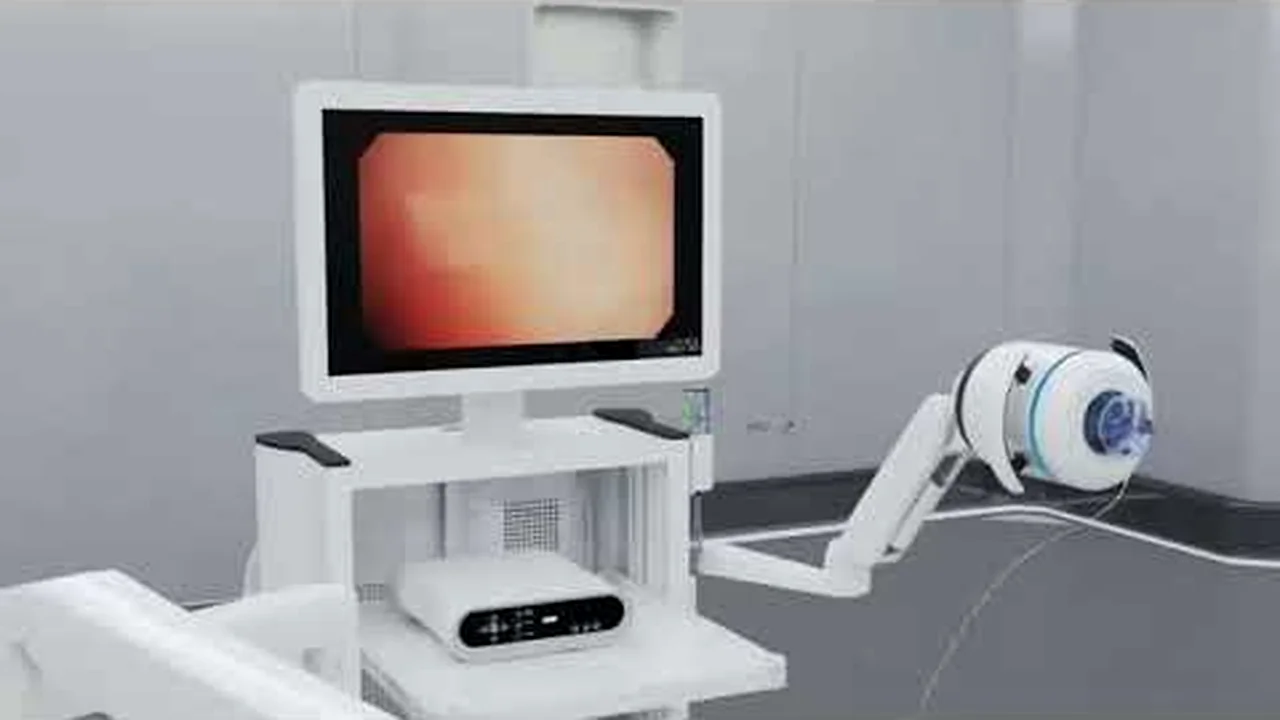
Cable-transmission architecture
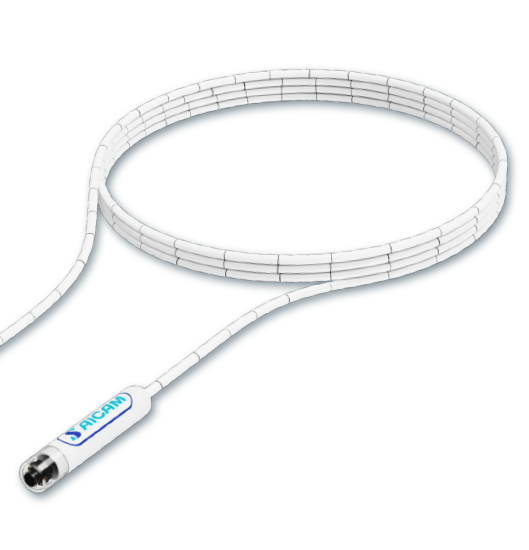
The ultra-flexible cable supports power delivery and real-time image transmission between the capsule endoscope and image processor.
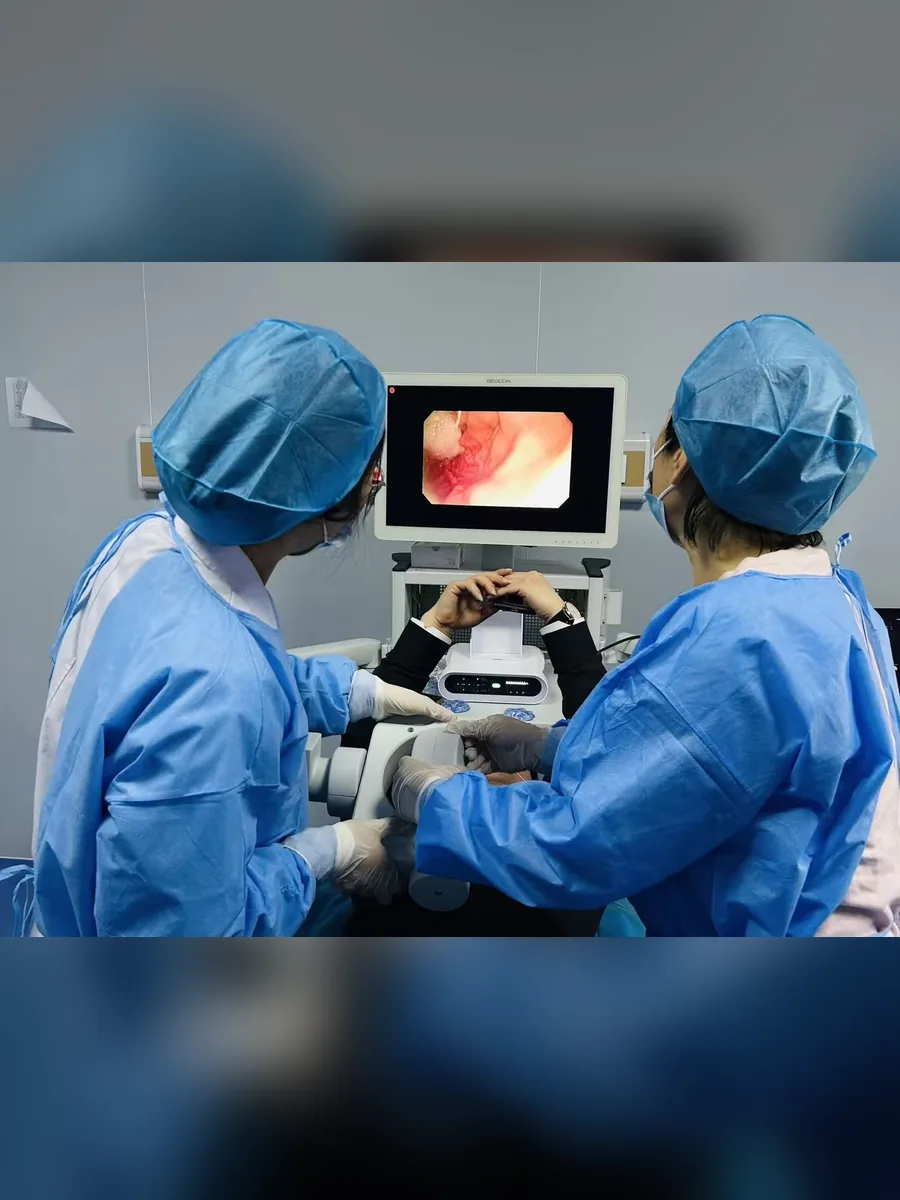
Upper GI tract examination
A cable-transmission magnetically controlled capsule endoscopy system combining a disposable sterile capsule endoscope, an image processor, and a magnetic control device. Combined magnetic and cable control supports real-time visualization of the esophagus, stomach, and duodenal bulb.
AICAM combines cable-enabled image transmission with external magnetic and cable control to support physician-directed visualization across the esophagus, stomach, and duodenal bulb.
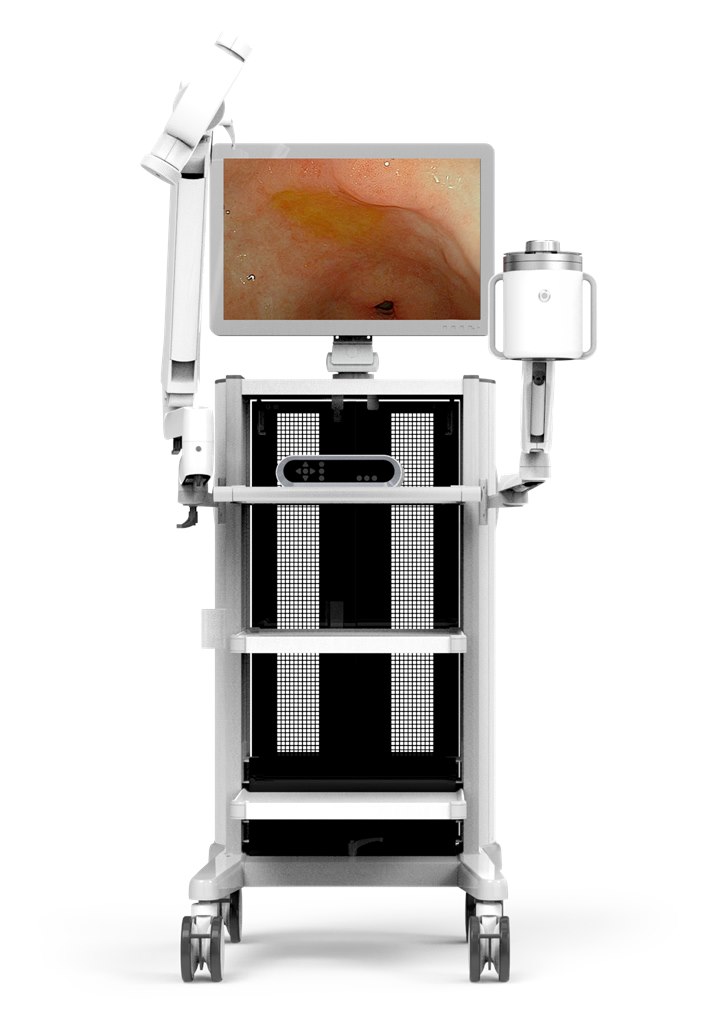
The registered AICAM-S-1 system comprises a disposable sterile capsule endoscope, an image processor, and a magnetic control device. The confirmed disposable capsule endoscope model is AICAM-CE-1.
Watch an overview of the AICAM system, its components, and the examination workflow.
Product registration status and availability vary by country or region.
Playing this video loads the YouTube player. See our Privacy Notice.
Watch on YouTubeKey system features follow the confirmed product architecture and terminology used in published clinical research.
The ultra-flexible cable supports power delivery and real-time image transmission between the capsule endoscope and image processor.
External magnetic force and cable retraction or release support control of capsule position and orientation.
The image processor receives and processes images from the capsule endoscope for real-time display and review.
The system was evaluated for examination and focal lesion detection in the esophagus, stomach, and duodenal bulb.
Complete the site-approved preparation protocol and pre-examination assessment.
The patient swallows the disposable sterile capsule endoscope after preparation.
The physician uses the magnetic control device and cable control device to guide capsule position and orientation.
Images are transmitted to the image processor in real time for display and review.
After examination, the capsule is retrieved through the mouth via the cable, and the physician prepares the examination report.
A prospective, multicenter, self-controlled clinical trial compared CT-MCCE with conventional gastroscopy for upper GI tract examination and focal lesion detection. The study enrolled 180 adults at three hospitals in China.
The authors reported diagnostic performance comparable with EGD in the study setting, a lower incidence of discomfort, and no adverse events observed during the study.
Tian Y, Du S, Liu H, et al. Gastrointest Endosc. 2025;101(4):804-817. doi:10.1016/j.gie.2024.07.028. Results should be interpreted within the enrolled population, study protocol, and limitations reported by the authors.
Engage with Saluentra Medical on clinical workflows, published evidence, and region-specific partnership opportunities.
Explore how the AICAM system can support upper GI tract examination workflows within applicable local requirements.
Review published clinical evidence and discuss professional education, system operation, and training needs.
Discuss region-specific distribution opportunities, product information, and market access requirements.
AICAM is registered as a Class III medical device in China. Regulatory registration processes are in progress in the United States and European Union.
Regulatory status, approved indications, and product availability vary by country or region. Information on this website does not replace approved product labeling or instructions for use.
Founded in 2018 in Beijing, Saluentra Medical is an innovation-driven medical-device company focused on upper GI tract examination. The company develops the AICAM CT-MCCE System, integrating cable transmission with combined magnetic and cable control. The system has been evaluated in prospective multicenter clinical research published in Gastrointestinal Endoscopy.
Contact Saluentra Medical about product information, clinical or technical questions, institutional needs, or distribution and business cooperation.
Online inquiries are handled in accordance with our Privacy Notice.